
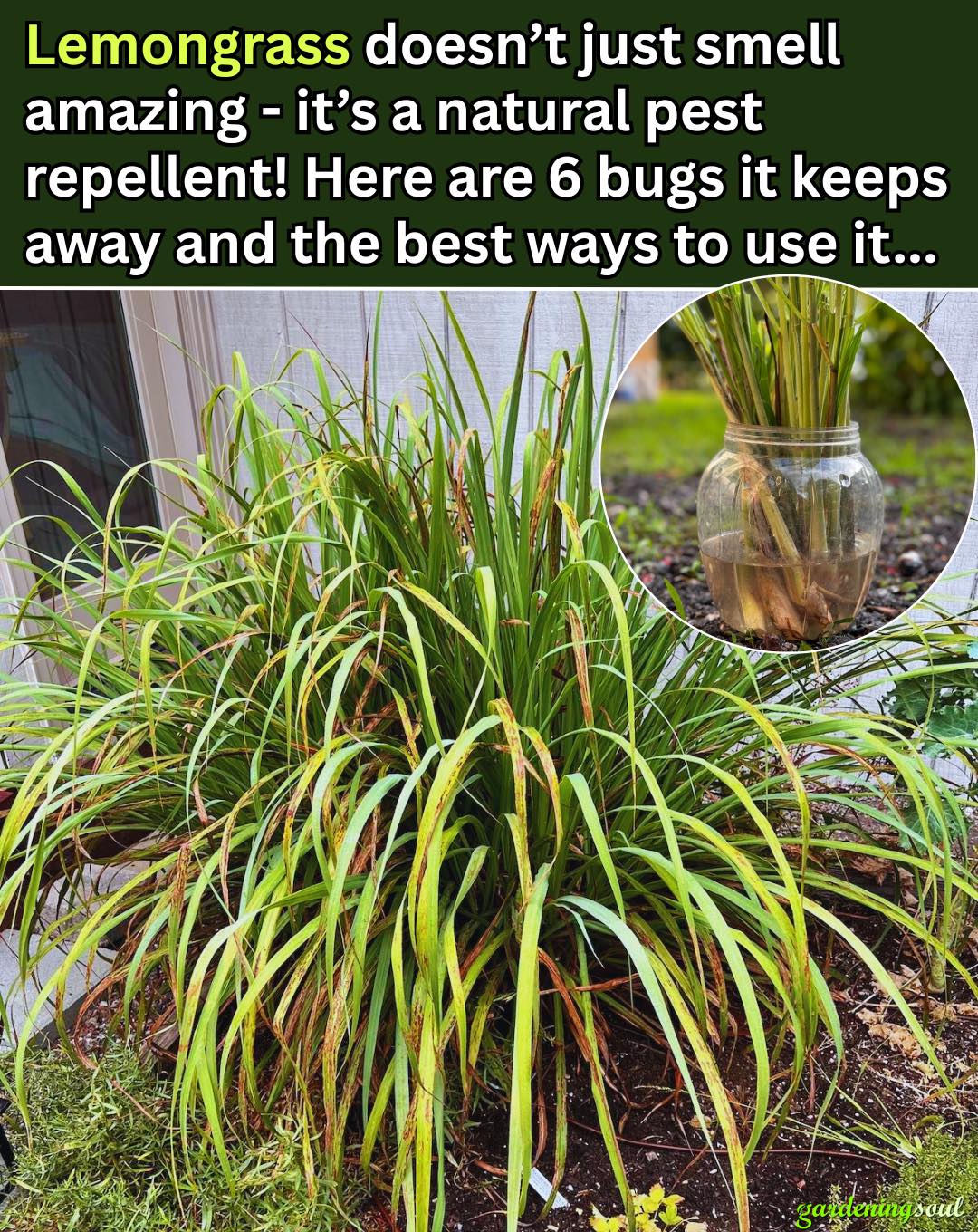
If you love spending time in your garden but hate being bothered by buzzing, biting, or plant-damaging pests, there’s one fragrant plant that can make a world of difference – lemongrass.
Why Lemongrass Is Such a Powerful Pest Repellent
The secret behind lemongrass’s pest-repelling ability lies in its essential oils, particularly citronella – a compound also found in citronella grass (Cymbopogon nardus and Cymbopogon winterianus).
While these are different species, lemongrass (Cymbopogon citratus) still produces a strong citronella aroma that naturally deters many insects.
Here’s why pests avoid it:
- The citrusy scent masks human and plant odors that attract bugs.
- Its essential oils interfere with pests’ sensory receptors, making it difficult for them to locate food or hosts.
- Lemongrass oil also has mild insecticidal and antifungal properties, helping prevent infestations and fungal issues on plants.
The best part? It’s completely natural, safe for pollinators like bees, and adds beauty and fragrance to your garden.
6 Pests That Lemongrass Naturally Repels
Let’s explore the most common pests that steer clear of lemongrass – and how to use it against each one effectively.
1. Mosquitoes
This is the pest lemongrass is most famous for repelling – and for good reason.
Mosquitoes despise the citronella oil found in lemongrass leaves and stems. The strong scent confuses their sense of smell, preventing them from detecting carbon dioxide and body odors, which they use to find humans and animals.
Best Ways to Use Lemongrass Against Mosquitoes:
- Grow it near outdoor seating areas: Plant lemongrass in large pots around patios, decks, or porches. When the wind moves through the leaves, it releases the repelling aroma.
- Crush the leaves: Rub a few fresh leaves between your hands and apply lightly to skin or clothing before heading outside.
- Make a natural spray: Mix 10 drops of lemongrass essential oil with 2 tablespoons of witch hazel and ½ cup of water in a spray bottle. Shake and apply to exposed skin (avoid eyes).
- Burn dried lemongrass leaves: The smoke releases citronella compounds that drive mosquitoes away during summer evenings.
This method is safer than chemical repellents – and it leaves your garden smelling fresh and clean.
2. Flies
Few things ruin a relaxing afternoon outdoors like a swarm of houseflies or fruit flies. Luckily, lemongrass can drive them away naturally.
The scent of lemongrass confuses flies’ sensory systems and prevents them from landing on food, trash, or compost piles.
How to Use Lemongrass to Repel Flies:
- Essential oil diffuser: Add a few drops of lemongrass oil to an outdoor diffuser near your table.
- Spray surfaces: Combine 1 cup of water, 1 tablespoon of vinegar, and 10 drops of lemongrass oil. Spray kitchen counters, garbage bins, and outdoor eating areas.
- Hang bundles: Dry lemongrass stalks and hang small bunches near doorways, windows, and picnic areas.
You’ll not only repel flies – you’ll fill the air with a refreshing citrus scent that deters other flying insects, too.
3. Ants
Ants use scent trails to communicate and find food sources. The strong essential oils in lemongrass disrupt those trails, making it harder for them to navigate or locate food.
Ways to Use Lemongrass Against Ants:
- Lemongrass essential oil barrier: Mix 10 drops of oil with a cup of water and spray along entry points – windowsills, door frames, and baseboards.
- Cotton ball method: Soak cotton balls in lemongrass oil and place them near cracks or ant pathways.
- Garden protection: Plant lemongrass around garden beds or near compost bins to prevent ants from nesting nearby.
Unlike commercial ant sprays, lemongrass doesn’t harm beneficial insects or pets – it simply makes your home and garden less appealing to ants.
For Complete Cooking STEPS Please Head On Over To Next Page Or Open button (>) and don’t forget to SHARE with your Facebook friends.
For Complete Cooking STEPS Please Head On Over To Next Page Or Open button (>) and don’t forget to SHARE with your Facebook friends.


