- Spread a thick layer of compost or aged manure over beds.
- Test your soil pH; add lime if acidic or sulfur if too alkaline.
- Apply mulch (straw, shredded leaves, or bark) to insulate roots, prevent erosion, and suppress winter weeds.
- Plant cover crops like clover, rye, or vetch to protect bare soil. These “green manures” naturally fix nitrogen and improve structure when tilled under in spring.
Pro Tip: Avoid leaving bare soil exposed through winter – it erodes easily and loses fertility.
4. Plant Fall and Overwintering Vegetables
Fall doesn’t mean food production is over. Many vegetables actually taste sweeter after a light frost because cold weather converts starches into sugars.
Great crops to plant in fall:
- Garlic and onions (for a summer harvest)
- Spinach, kale, and Swiss chard
- Carrots and beets
- Lettuce and radishes
- Turnips and rutabagas
Use cold frames, row covers, or even plastic tubs to extend the season and protect young crops from hard frosts. In mild zones, you can harvest fresh greens right through winter.
5. Divide and Transplant Perennials
Overcrowded perennials can stop blooming and compete for nutrients. Fall’s cooler weather and moist soil make it the perfect time to divide and move them.
Plants to divide now:
- Daylilies
- Hostas
- Irises
- Coneflowers
- Shasta daisies
How to do it:
- Dig up the plant clump carefully.
- Slice it into sections with a spade or knife, ensuring each has roots and shoots.
- Replant divisions immediately with compost and water well.
Pro Tip: Avoid dividing peonies too late in fall – they need time to establish before winter.
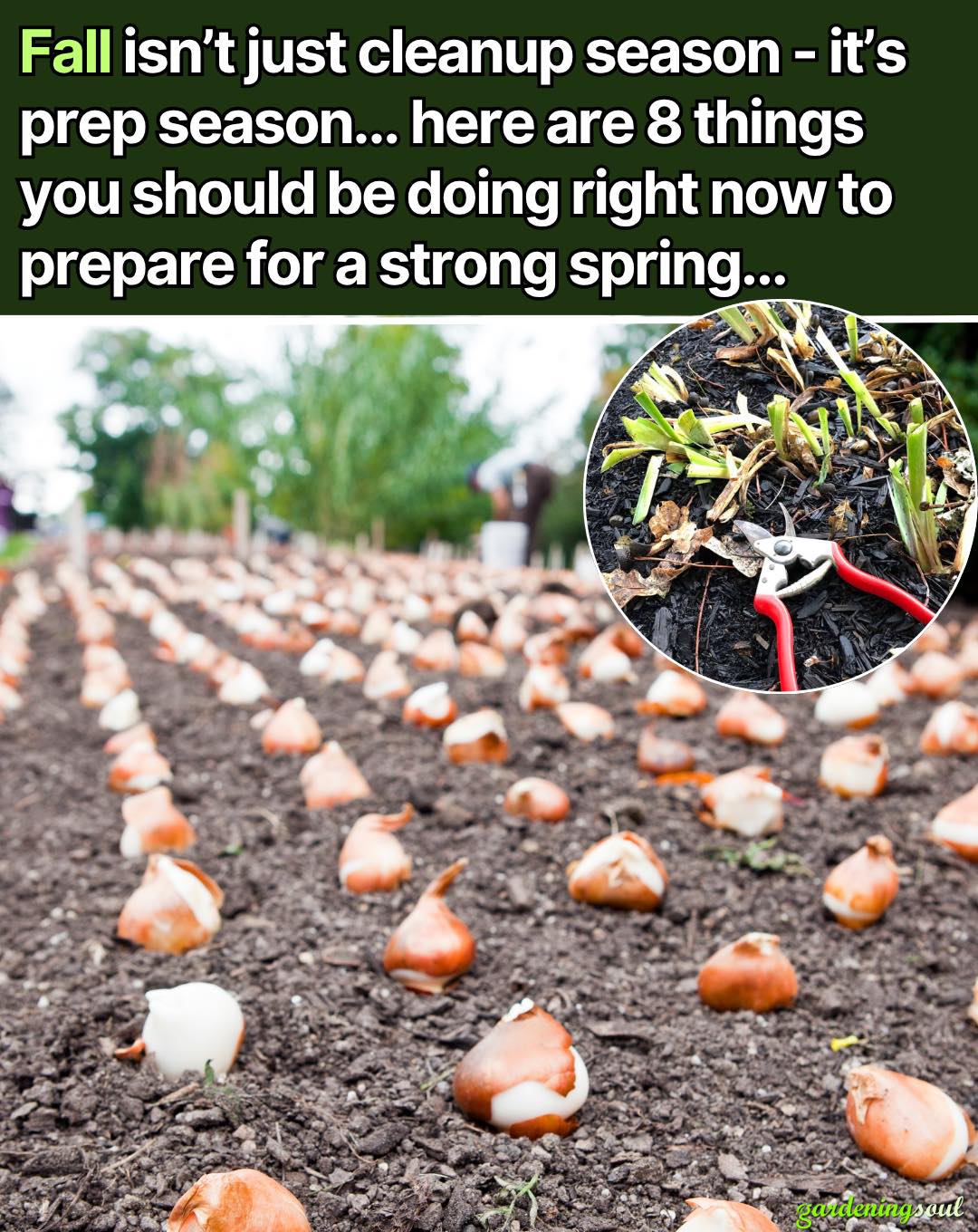
6. Plant Spring-Flowering Bulbs
Fall planting is essential for spring color. Bulbs need weeks of cold to trigger blooming.
For Complete Cooking STEPS Please Head On Over To Next Page Or Open button (>) and don’t forget to SHARE with your Facebook friends.
For Complete Cooking STEPS Please Head On Over To Next Page Or Open button (>) and don’t forget to SHARE with your Facebook friends.