Figs: The Ancient, Delicious, Slightly Weird “Fruit” (That’s Not Actually a Fruit)

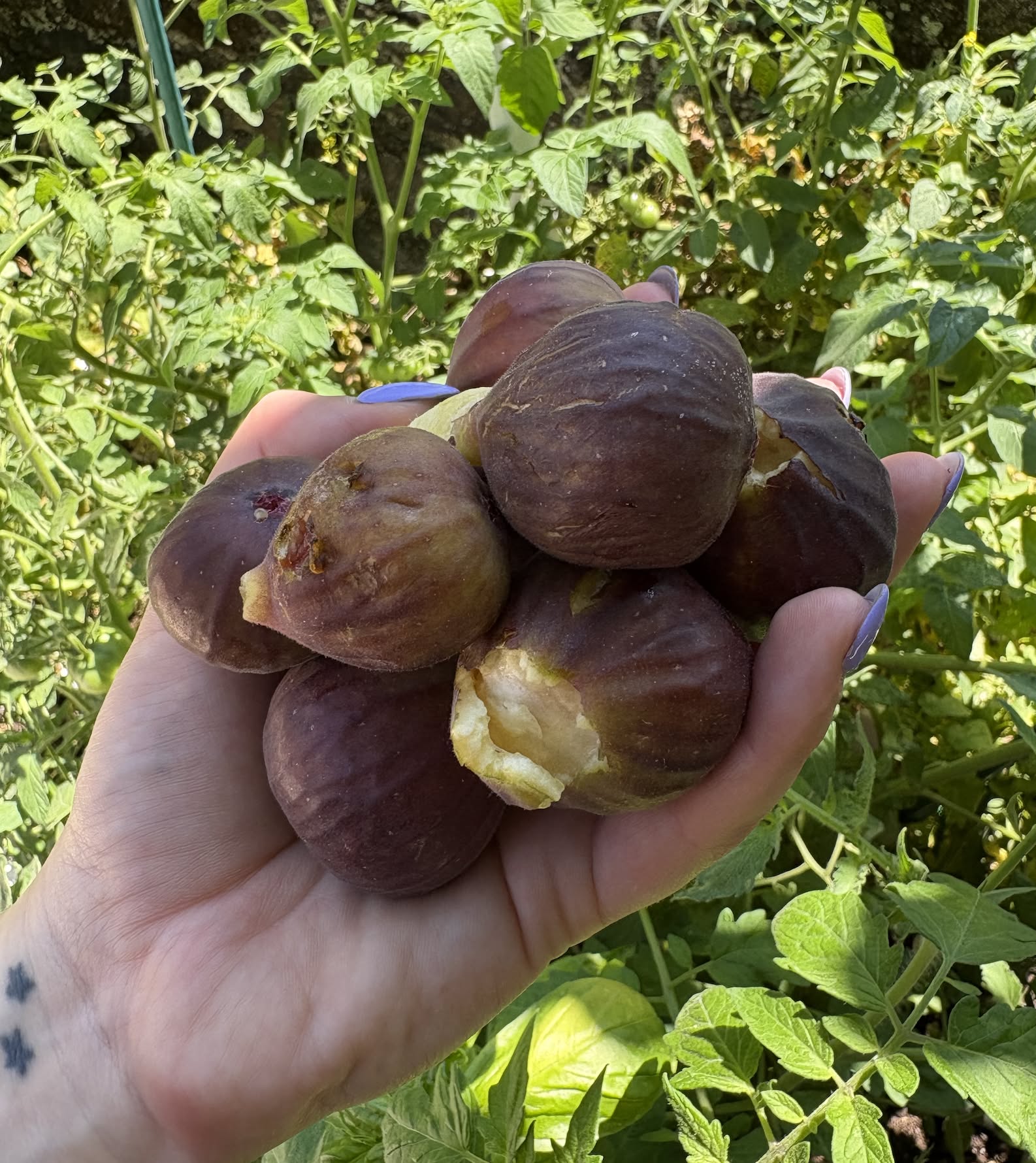
e club. Whether you’ve got one in a pot or a whole backyard orchard, figs are one of the coolest plants you can grow!
But here’s the kicker I like telling people I give my figs to: figs aren’t even actually fruit. Yup. They’re technically inverted flowers, which is a fun way to blow most people’s minds.
What Is a Fig?
Okay, get ready for some botanical nerding out, because why else would you be here? A fig isn’t a fruit in the traditional sense. Instead, it’s a structure called a syconium, which is basically, a hollow fleshy sac lined with tiny flowers inside. And yes, I tried my best to make that sound as creepy and unappealing as I possibly could.
When you eat a fig, you’re technically eating hundreds of tiny inverted flowers that bloomed inside the syconium. Weird, right? The crunchy bits you feel? Those are tiny little seeds, each one connected to a little flower that bloomed out of sight.
Think of it as a garden you eat from the inside out.
A Figgy History
Figs have been around forever (sort of).
Seriously though, people were cultivating figs even before wheat or barley. Archaeologists found fig remains in the Jordan Valley dating back over 11,000 years!! That’s longer than most crops we know and love today.
In fact, figs might be the first domesticated plant (kinda hard to prove it either wa). Ancient people probably noticed wild fig trees popping up from cuttings or dropped fruit and figured out how to get them to grow near settlements.
By the time the ancient Egyptians, Greeks, and Romans rolled around, figs were already famous.
Figs show up in Egyptian tomb paintings, Greek myths (hi, Dionysus), and Roman feasts. Pliny the Elder even wrote about figs as a health food, which makes sense, since they’re packed with fiber, minerals, and antioxidants. They’re still seen as a health food today it seems like.
The Romans spread figs all over Europe, and from there they made their way to the Americas. Spanish missionaries planted them in California in the 1700s, hence the name “Mission fig.”
How Do Figs Reproduce?
Here’s where things get super weird and rumors fly about figs. Most figs rely on a special relationship with fig wasps. Yep, tiny wasps crawl inside the fig to pollinate it. In return, the fig provides a safe place for the wasp to lay its eggs. Nature is both beautiful and gross at the same time.
Without the wasp, the fig can’t develop its seeds, and without the fig, the wasp can’t complete its life cycle. It’s a delicate, and very specific dance between plant and insect.
(But don’t worry like my coworker Maxwell did when I told him about this, you’re probably not eating a wasp when you bite into a fig. Commercial varieties like Chicago Hardy are parthenocarpic, which means they don’t need pollination to produce fruit. No wasp required!)
If you’re fascinated by plant symbiosis, check out my post on glowing plants and bioluminescence, because nature has a knack for crazy partnerships!
For Complete Cooking STEPS Please Head On Over To Next Page Or Open button (>) and don’t forget to SHARE with your Facebook friends.
For Complete Cooking STEPS Please Head On Over To Next Page Or Open button (>) and don’t forget to SHARE with your Facebook friends.