Love this method

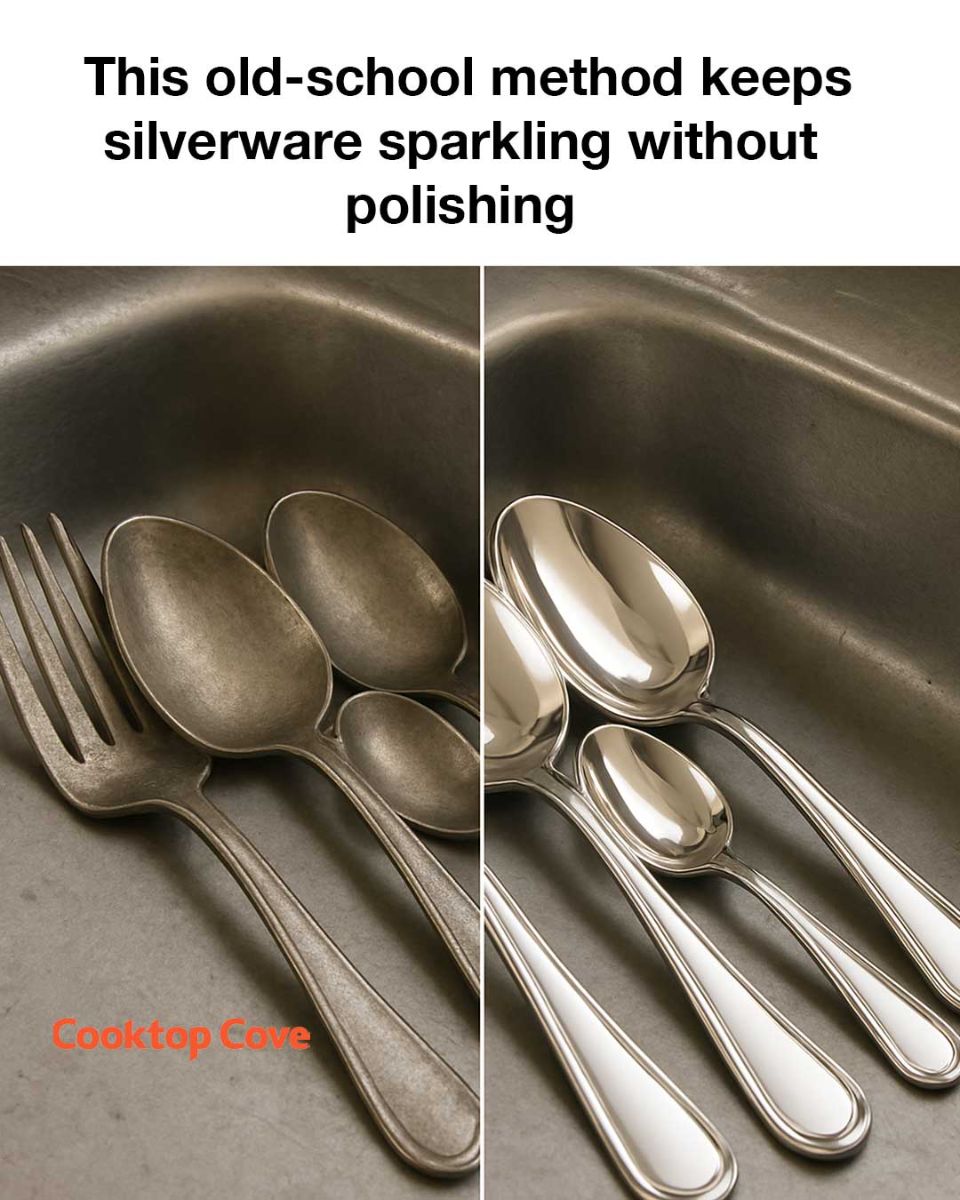
4. Step-by-Step Method
-
Line a non-metal container with aluminum foil (shiny side up).
-
Place tarnished silverware directly on foil.
-
Sprinkle ~1 tbsp baking soda per cup of water over silverware.
-
Pour boiling water to fully submerge the silverware.
-
Let soak 5–10 minutes, depending on tarnish level.
-
Remove, rinse with warm water, and dry with a soft cloth.
Tip: Works well for intricate or detailed pieces.
5. How It Compares to Modern Polishes
| Feature | Baking Soda + Foil | Commercial Polishes |
|---|---|---|
| Abrasiveness | Non-abrasive | Often abrasive |
| Silver wear | None | Can thin silver over time |
| Cost | Very low | Medium to high |
| Environmental impact | Eco-friendly | Can contain harmful chemicals |
6. Common Mistakes to Avoid
-
Silverware must touch foil for the reaction to work.
-
Don’t use on pieces with glue or delicate parts.
-
Don’t over-soak, as prolonged exposure may damage silver.
-
Always rinse and dry thoroughly to prevent water spots.
7. Tips for Long-Lasting Shine
-
Store silverware in cool, dry places.
-
Use anti-tarnish strips or cloths in storage.
-
Wash regularly with mild soap and water.
-
Avoid rubber bands or latex gloves when handling silver.
8. Benefits
-
Cost-effective: No expensive polishes needed.
-
Eco-friendly: Reduces chemicals and packaging waste.
-
Simple & effective: Quick, easy, works on tricky pieces.
9. Real-Life Success
-
Homeowners report silverware looks “as good as new.”
-
Praised for speed, simplicity, and excellent results.
💡 Summary: This method is a safe, inexpensive, and historically proven way to clean silverware. It removes tarnish without harming the metal, uses common household items, and is better for both your silver and the environment than chemical polishes.
For Complete Cooking STEPS Please Head On Over To Next Page Or Open button (>) and don’t forget to SHARE with your Facebook friends.