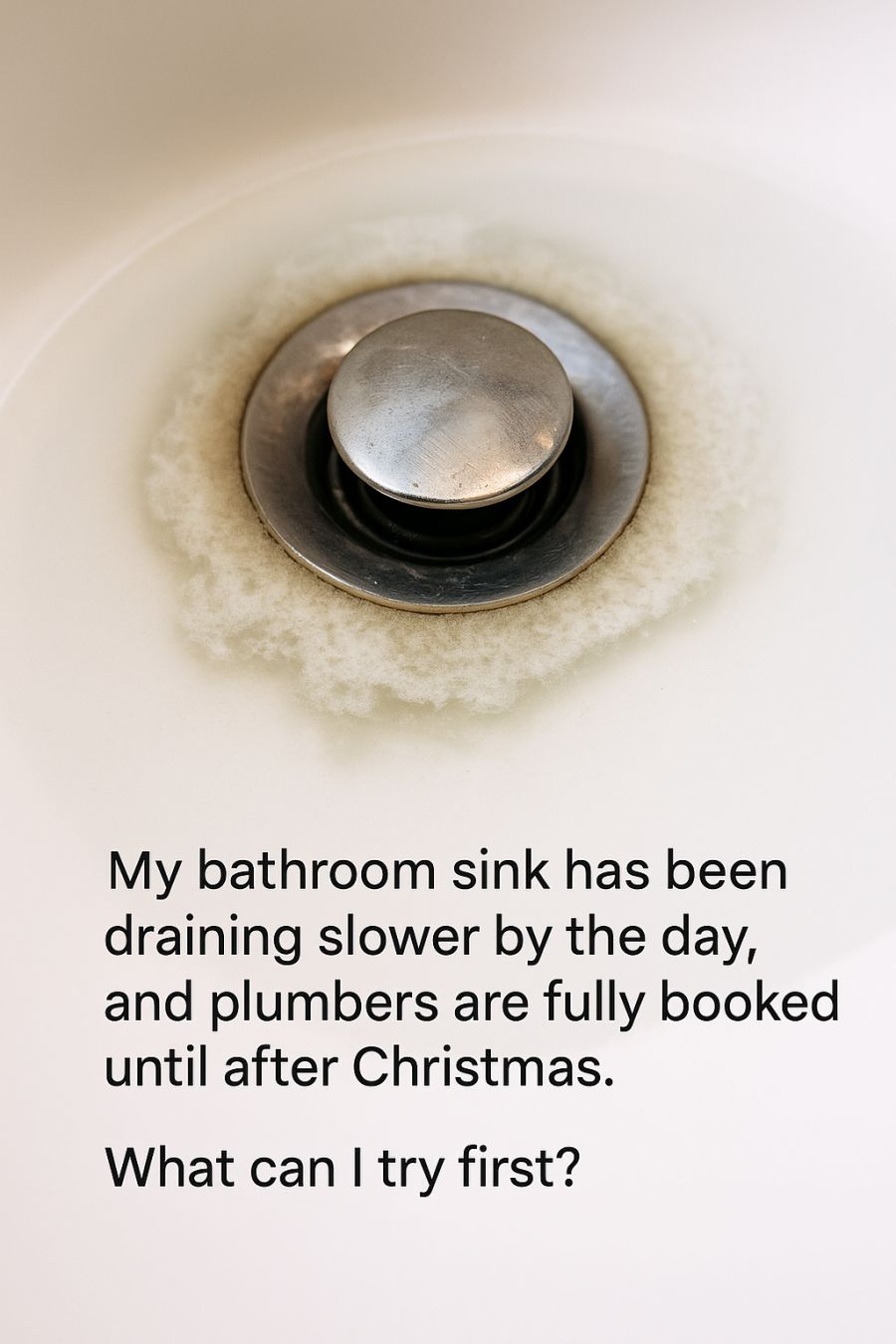
A slow-draining bathroom sink can be a frustrating problem to encounter, especially during the busy holiday season when professional help is hard to come by. With plumbers booked solid until after Christmas, many homeowners find themselves in a bind, needing to address this common household issue on their own. Fortunately, there are several do-it-yourself methods that you can try to restore your sink’s drainage without needing specialized tools or chemicals.
Before you start, it’s important to remember that tackling a slow drain requires patience and a bit of trial and error. While some clogs are simple and easy to remove, others may be deeper within the plumbing system and require more effort. In this guide, we’ll explore ten practical steps you can take to fix your slow-draining bathroom sink, using items you likely already have at home.
Advertisement
1. Start With The Simplest Test: Is It Just This Sink?
Before diving into the process of unclogging your sink, check if the problem is isolated to just one sink or if it’s a more widespread plumbing issue. Turn on the faucets in other sinks around your home to see if they are draining slowly as well. This can help you determine if the problem is with your sink’s individual drain or if it’s part of a larger plumbing concern.
If only one sink is draining slowly, it’s likely the problem is with that particular sink’s plumbing. However, if multiple sinks are affected, it might be worth checking your main plumbing lines or considering that there might be a blockage further down the system. This initial test can save you time and effort by ensuring you’re addressing the right issue.
2. Clear Out The Stopper: The Usual Hair And Soap Culprit
Bathroom sinks often have pop-up stoppers that catch hair and soap scum, which can quickly lead to a slow drain. To check this, remove the stopper from the sink. This may require unscrewing it or lifting it out, depending on the model. Once removed, clean off any visible hair or gunk that may have accumulated.
After cleaning the stopper, run water through the drain to see if the flow has improved. This simple step is often all it takes to restore proper drainage, as hair and soap scum are common culprits of slow drains.
For Complete Cooking STEPS Please Head On Over To Next Page Or Open button (>) and don’t forget to SHARE with your Facebook friends.
For Complete Cooking STEPS Please Head On Over To Next Page Or Open button (>) and don’t forget to SHARE with your Facebook friends.