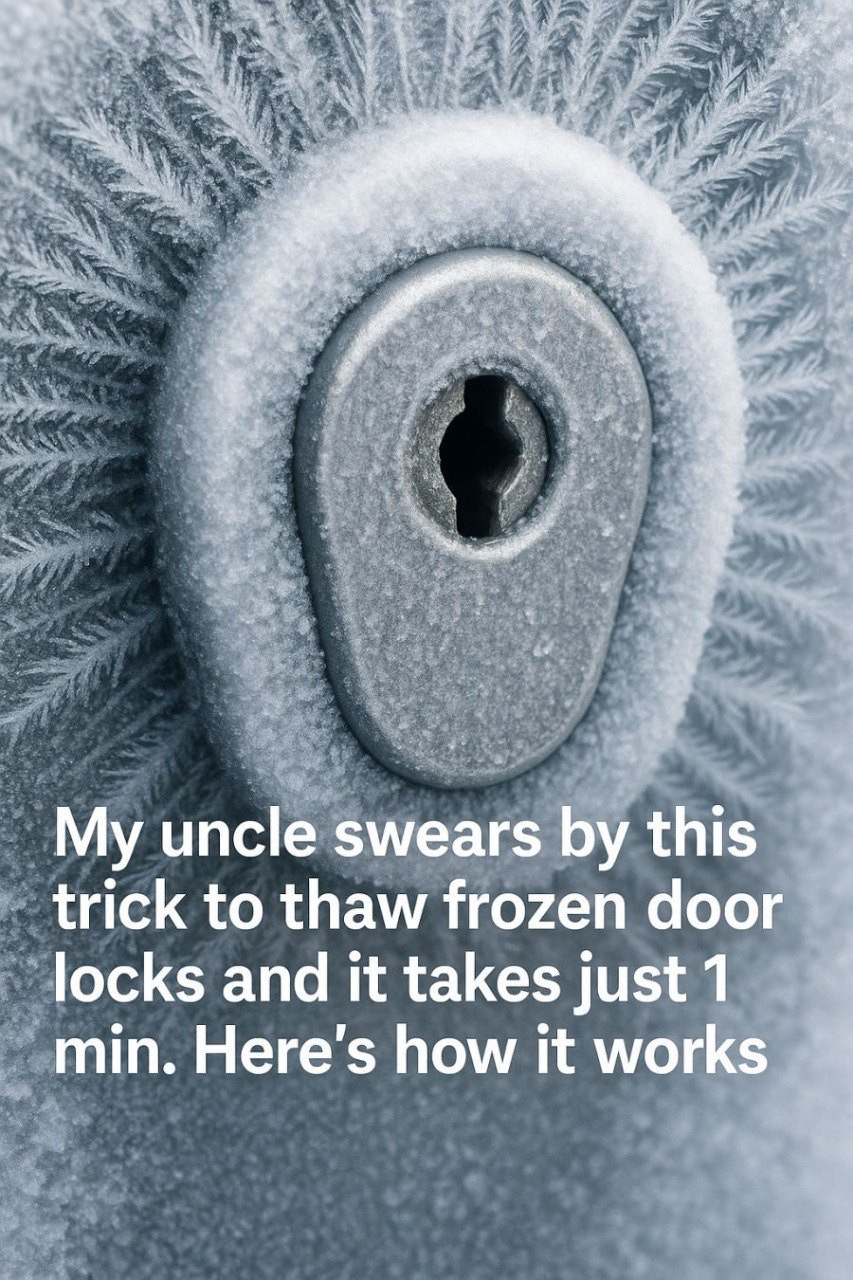
My uncle swears by this trick to thaw frozen door locks and it takes just 1 min. Here’s how it works

Step 2: Warm It Up Safely (No Open Flames Needed)
Before using the hairdryer, make sure you’re near an outlet or have an extension cord. Turn the hairdryer on to its highest heat setting. It’s important to note that while a hairdryer uses electricity, it’s much safer than using open flames, such as a lighter or match, which could damage the lock or pose a fire hazard.
Step 3: How To Apply The Heat Directly To The Lock
Hold the hairdryer about 6 inches away from the lock and direct the heat towards the keyhole. Move the hairdryer slightly back and forth to ensure even heating. Continue this for about 30 seconds to a minute, or until you notice the lock is warming up and any visible ice is melting.
Step 4: The Exact Moment You Should Try Turning The Key
Once you feel the lock has warmed sufficiently, gently try turning your key in the lock. Avoid using excessive force; if it doesn’t turn easily, apply more heat for another 30 seconds and try again. The key should turn smoothly once the ice inside has melted.
Why This Method Works So Fast On Frozen Locks
The hairdryer’s heat quickly melts the ice that has formed inside the lock. Unlike other methods, which can take longer or require more invasive techniques, the direct application of heat ensures the ice is thawed almost instantly, allowing the lock to function normally.
Common Mistakes That Can Damage Your Car Or House Door
One common mistake is using hot water to thaw a lock. While this might work temporarily, it can lead to more moisture entering the lock, which can refreeze later. Another mistake is using excessive force on the key, which can bend or break it if the lock is still frozen.
When To Avoid Viral Hacks Like Hot Water, Lighters, And De-Icer Sprays
Hot water can cause additional problems by introducing more moisture that can refreeze. Lighters or matches can damage the lock’s internal mechanism or even cause a fire hazard. Over-the-counter de-icer sprays can be effective but are not always readily available and can be more costly over time.
A Backup Plan If The 1-Minute Trick Doesn’t Work
If the hairdryer trick doesn’t work, consider using a lock de-icer spray as a backup. Additionally, keeping a portable battery-powered hairdryer in your car can be a useful backup plan if you’re away from a power source.
How To Prevent Your Locks From Freezing In The First Place
Applying a small amount of graphite lubricant or a lock-specific lubricant to your locks before the cold weather hits can prevent moisture from seeping in and freezing. Covering locks with a rubber or plastic cover can also protect them from snow and ice.