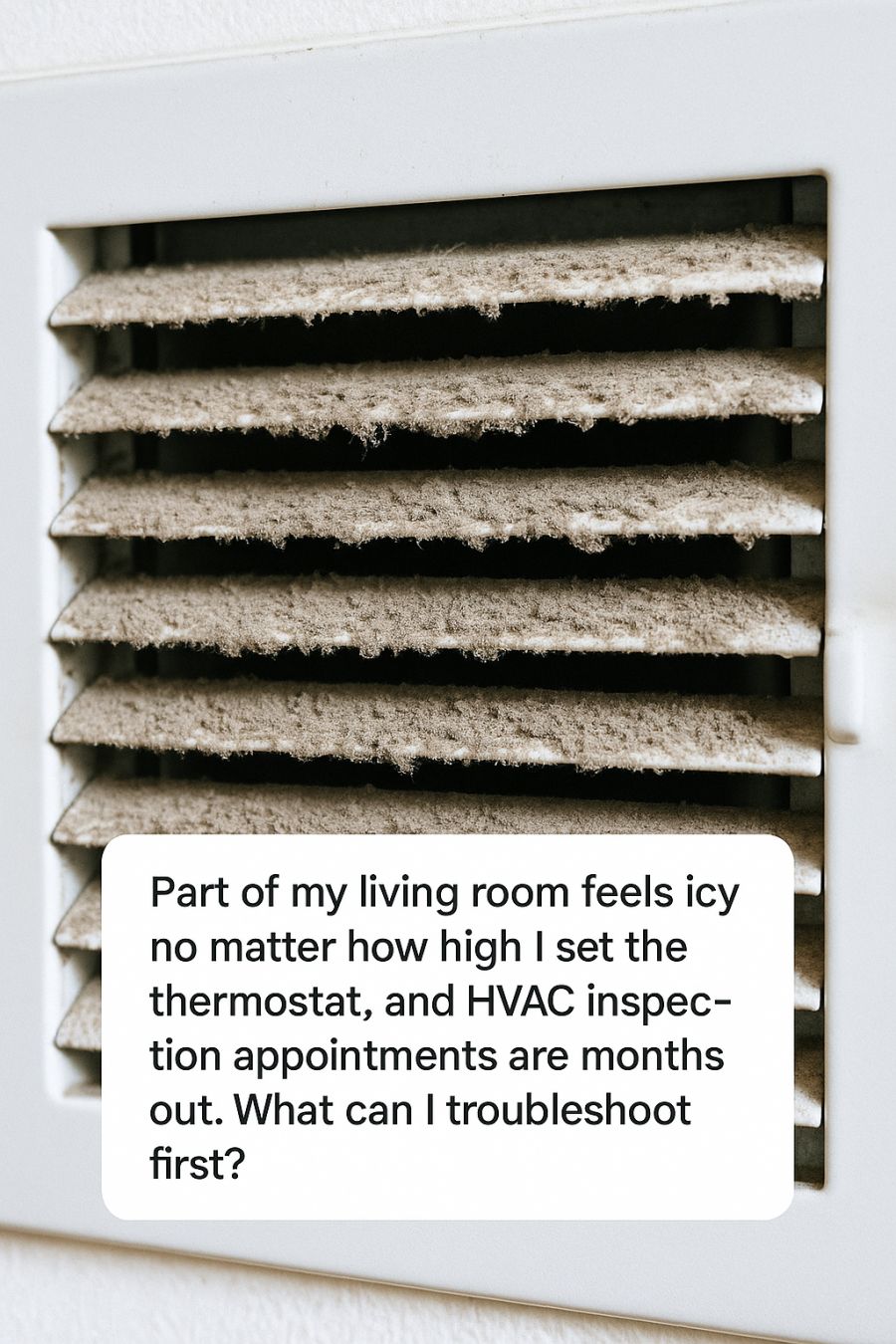
Part of my living room feels icy no matter how high I set the thermostat, and HVAC inspection appointments are months out. What can I troubleshoot first?
Experiencing an icy portion of your living room can be frustrating, especially when you’ve already dialed up the thermostat and are still left shivering. The good news is that this problem is not uncommon and often can be resolved with a bit of troubleshooting on your part. Before you resign yourself to months of chilly discomfort waiting for an HVAC professional, consider taking some practical steps that might reveal the source of the cold and possibly fix it.
Understanding the dynamics of airflow, heating systems, and insulation can empower you to make some immediate improvements. This article will guide you through a series of checks and adjustments you can perform yourself. From simple tasks like inspecting vents to more involved steps such as examining ductwork, these actions can help you regain control over your indoor climate and improve your overall comfort.
1. Start With the Obvious: Are Your Vents Blocked or Closed?
Begin your troubleshooting by ensuring all your vents are open and unobstructed. Even partially closed vents can significantly impede airflow, leading to cold spots in your living room. Check each vent’s position and make sure they’re fully open. Use a ruler to measure the vent slats; they should be parallel and open with at least a 90-degree angle.
Additionally, ensure that no furniture or large objects are placed directly in front of or over the vents. A minimum clearance of 6-12 inches from the vent is recommended to allow proper airflow. If your vents are adjustable, experiment with directing the airflow toward the area that feels colder.
2. Check for Furniture, Rugs, and Decor Choking Airflow
Furniture arrangements can inadvertently block airflow from heating vents, leading to uneven room temperatures. Assess the layout of your living room and identify any potential obstructions. Large couches, bookshelves, or even decorative items placed too close to vents can disrupt the flow of warm air.
Consider rearranging your furniture to create a clear path for air to circulate freely. If you have rugs covering floor vents, ensure they have adequate openings or consider repositioning them. Maintaining a clear and unobstructed path for airflow can significantly enhance the efficiency of your heating system.
3. Make Sure Return Air Vents Aren’t Covered or Dirty
Return air vents play a crucial role in your HVAC system by pulling air back into the system for heating and redistribution. If these vents are blocked or clogged with dust, they can hinder the system’s effectiveness. Check each return vent in your living room to ensure they are uncovered and clean.
To clean the vents, use a vacuum cleaner with a hose attachment to remove dust and debris. If the vent covers are particularly dirty, remove them and wash them with warm soapy water before reinstalling. Keeping return vents clean and clear can improve airflow and help maintain a consistent temperature throughout your living space.
4. Do a Simple Filter Check Before Blaming the Furnace
A dirty or clogged furnace filter can restrict airflow, making it difficult for your heating system to distribute warm air effectively. Before assuming there’s a more significant issue, check the filter. Most filters are located in the return air duct or near the furnace unit itself.
Remove the filter and inspect it for dust and debris. If the filter appears dirty or hasn’t been changed in the last three months, replace it with a new one. Use the correct size and type recommended for your system. A clean filter can improve airflow and heating efficiency, potentially resolving your cold spot issue.
5. Use the Paper Test to Spot Weak Airflow From Supply Vents
To identify weak airflow from supply vents, try the simple paper test. Hold a piece of paper, such as a tissue or a lightweight sheet, in front of each vent while the system is running. If the paper fails to flutter or move significantly, it indicates weak airflow.
Weak airflow can be due to several factors, including duct obstructions, closed dampers, or a malfunctioning blower fan in the furnace. By identifying which vents have weak airflow, you can narrow down potential problem areas and take further action, such as checking for duct blockages or consulting a professional if necessary.
6. Compare Room Temperatures With a Cheap Thermometer
Next Page
For Complete Cooking STEPS Please Head On Over To Next Page Or Open button (>) and don’t forget to SHARE with your Facebook friends.