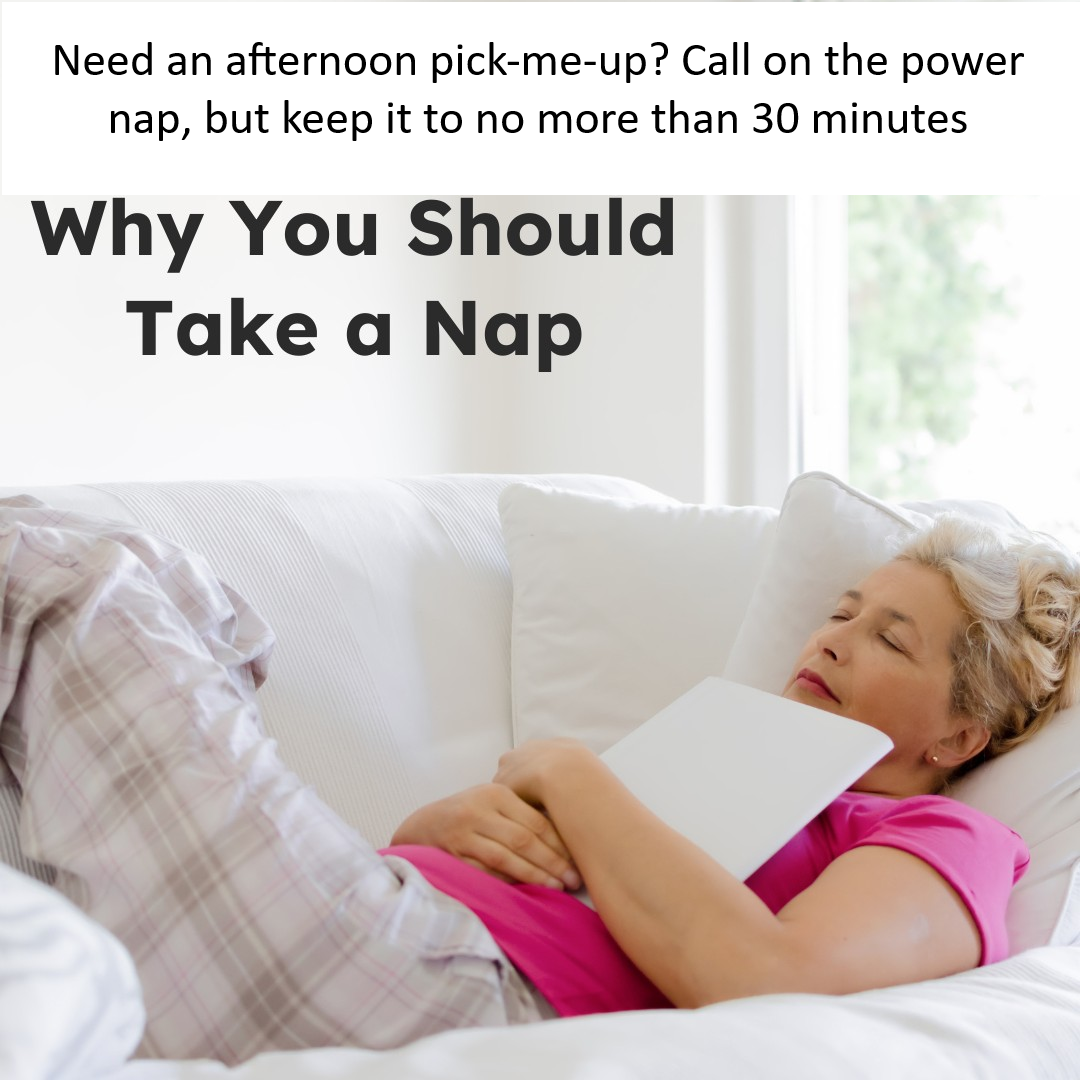
Naps aren’t only for toddlers. Approximately 1 in 3 American adults nap, according to the Pew Research Center.
Naps come in all shapes and sizes. “Some people take restorative daytime naps in order to compensate for insufficient nighttime sleep,” says Shanon Makekau, MD, a pulmonologist and medical director of the Sleep Laboratory at Kaiser Permanente in Honolulu. “Others may take ‘prophylactic’ naps to prepare for an overnight shift.”
And then there’s the power nap.
“A power nap is a nap that’s short — less than 30 minutes long,” says Safia Khan, MD, assistant program director of the Sleep Medicine Fellowship Program at UT Southwestern Medical Center in Dallas.
It provides the restorative benefits of sleep without adversely affecting one’s ability to fall asleep at night, Dr. Makekau adds.
RELATED: Tips for Getting Into a Healthy Sleep Routine
Is It Healthy to Nap?
Yes, but follow these tips from Alex Dimitriu, MD, a Menlo Park, California–based psychiatrist and sleep medicine physician, so they don’t mess with sleep at night!
How Long Is a Power Nap?
Some experts say the power nap duration should be even shorter — 20 minutes max. But all agree it shouldn’t exceed 30 minutes. That’s because the body enters a deep sleep around that time, and waking up from a deep sleep can lead to grogginess, according to the Sleep Foundation.
This state of grogginess or drowsiness is also called “sleep inertia.” It’s when your body feels like you need to sleep more because your brain has already started to get into a deeper state of sleep, Dr. Khan explains.
Sticking to the shorter time frame keeps the body from dealing with sleep inertia so you wake up feeling recovered rather than sleepy. “With a power nap, you stay in the lighter stages of sleep,” Khan says. “When you’ve been sleeping longer than 30 minutes, it’s more difficult to wake up and you wake up feeling groggy versus when waking up from lighter sleep.”
Power naps are the most beneficial type of nap for most adults, according to The Sleep Doctor.
Illustrative graphic titled How to take a perfect nap shows pick a time between 1-3pm, turn off devices, pick a quiet environment, limit a nap to 20 minutes. Everyday Health logoFacebook
Everyday Health
What Are the Benefits of a Power Nap?
The main benefit of a power nap is to help you feel refreshed, so you feel more awake through the rest of the day. “When you take a power nap, it energizes you and makes you more alert for the next four to six hours,” Khan says. “You feel like you can get a lot more accomplished.”
continued on the next page
For Complete Cooking STEPS Please Head On Over To Next Page Or Open button (>) and don’t forget to SHARE with your Facebook friends.