Does a Caffeine Nap Actually Work?
Some people take the power nap to the next level by consuming coffee (or other source of caffeine) immediately before falling asleep.
“By the time coffee gets absorbed into the system, the effect of the caffeine will start working and will help wake you up,” Khan says.
One study had participants drink 200 milligrams of caffeine right before a 30-minute nap. (For reference, that’s about two cups of coffee, according to Mayo Clinic.) Those individuals tested higher on careful attention and fatigue in the 45 minutes after waking up from the nap compared with those who did not consume caffeine before sleeping.
Whether or not it’ll work for you depends on how you respond to caffeine. “There are some people who get wired immediately as they drink their coffee,” Khan says.
If you decide to give it a try, do it in the early afternoon — right after lunch, for example. “We don’t recommend drinking coffee past 3 or 4 p.m. because it can disrupt your nighttime sleep,” Khan says.

Who Are Power Naps Best For, and How Do I Know I’m Doing It Right?
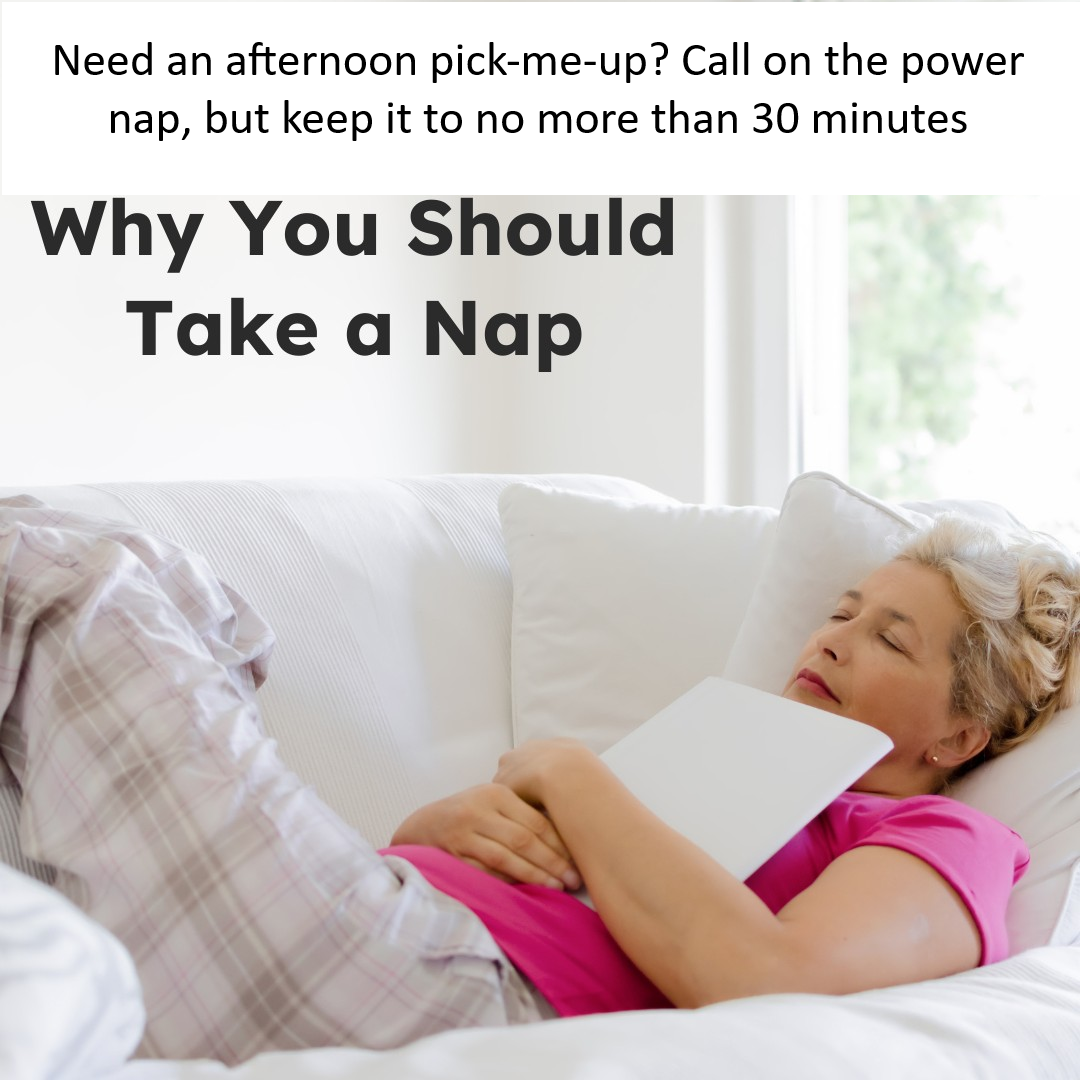
If you get the recommended seven to nine hours of sleep at night (per guidelines from National Sleep Foundation), wake up feeling rested, and have plenty of energy throughout the day, you probably don’t need to worry about power napping. But, if you tend to feel drowsy in the afternoon or you’ve had a poor night’s sleep, a power nap could indeed be beneficial, Khan says.
Power naps may be especially helpful for shift workers, especially those who need to avoid drowsiness for safety reasons, such as truck drivers or doctors prepping for surgery. “This reduces risks of errors in judgment,” Khan says.
Khan says it’s okay to power nap regularly. “However, if you need to take a power nap daily, then you may benefit from increasing total sleep time at night,” she says. You may not be getting enough quality or quantity of sleep, or there may be the presence of a sleep disorder such as sleep apnea.
RELATED: How Much Sleep You Really Need
Here are a few tips from the Sleep Foundation on how to get the most out of your power nap:
Don’t nap too close to nighttime sleep. A good rule of thumb is to nap at the midpoint between the time you wake up and the time you go to bed.
Set an alarm for 10 to 20 minutes. This will ensure you wake up feeling alert instead of groggy.
Find the right spot to rest. The best sleep environment for napping is the same one for nighttime: You want a cool, dark, quiet, and comfortable place. Your bedroom is ideal, and ear plugs and an eye mask may help, Makekau says.
Power naps aren’t for everyone. You may not be able to make it work schedule-wise or you may be the type who wakes up feeling disoriented or even more tired than you were before, regardless of the duration of the nap.
But, Khan adds that she’s personally a big fan. “Most people do benefit from taking a power nap,” she says.
For Complete Cooking STEPS Please Head On Over To Next Page Or Open button (>) and don’t forget to SHARE with your Facebook friends.