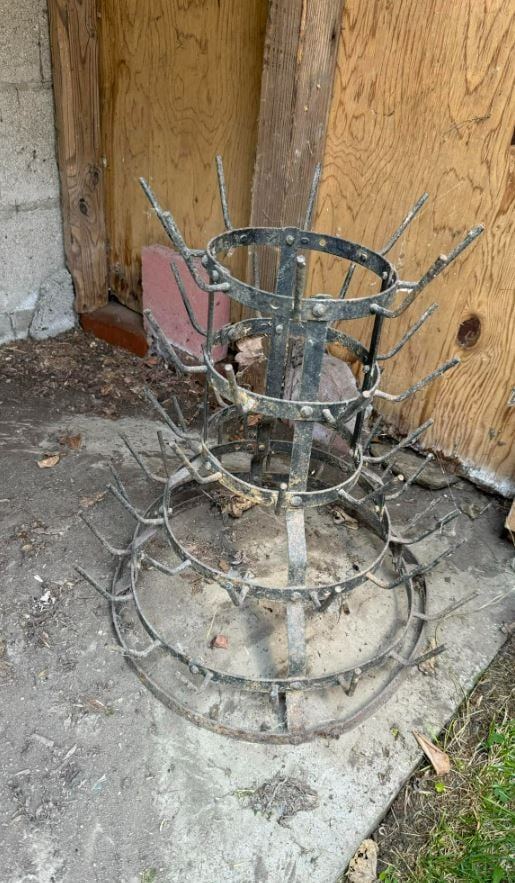
These racks were built with rows of upward-tilted hooks designed to hold bottles securely as they dried. Their construction was sturdy and efficient, often made from iron or steel, and meant to endure daily use. Although they were not made to be decorative, their symmetrical layout and practical elegance became part of the quiet charm of early 20th-century kitchens.
In that period, families reused bottles for nearly everything: milk, vinegar, juices, sauces, and canning. Small dairies, bakeries, and taverns relied on them as well, using racks to manage large batches of washed bottles. Because they saved time and prevented spoilage, bottle racks were considered indispensable in both homes and small businesses.
Over time, disposable packaging replaced returnable glass containers, and simple tools gave way to automated machines. As a result, many people today do not recognize vintage bottle racks or understand their purpose. What was once ordinary has become a curiosity from another era.
Despite this shift, the racks continue to fascinate collectors and artists. Marcel Duchamp famously elevated one to the status of art, recognizing its sculptural quality and functional beauty. Its geometric shape makes it visually striking even today.
For Complete Cooking STEPS Please Head On Over To Next Page Or Open button (>) and don’t forget to SHARE with your Facebook friends.
For Complete Cooking STEPS Please Head On Over To Next Page Or Open button (>) and don’t forget to SHARE with your Facebook friends.