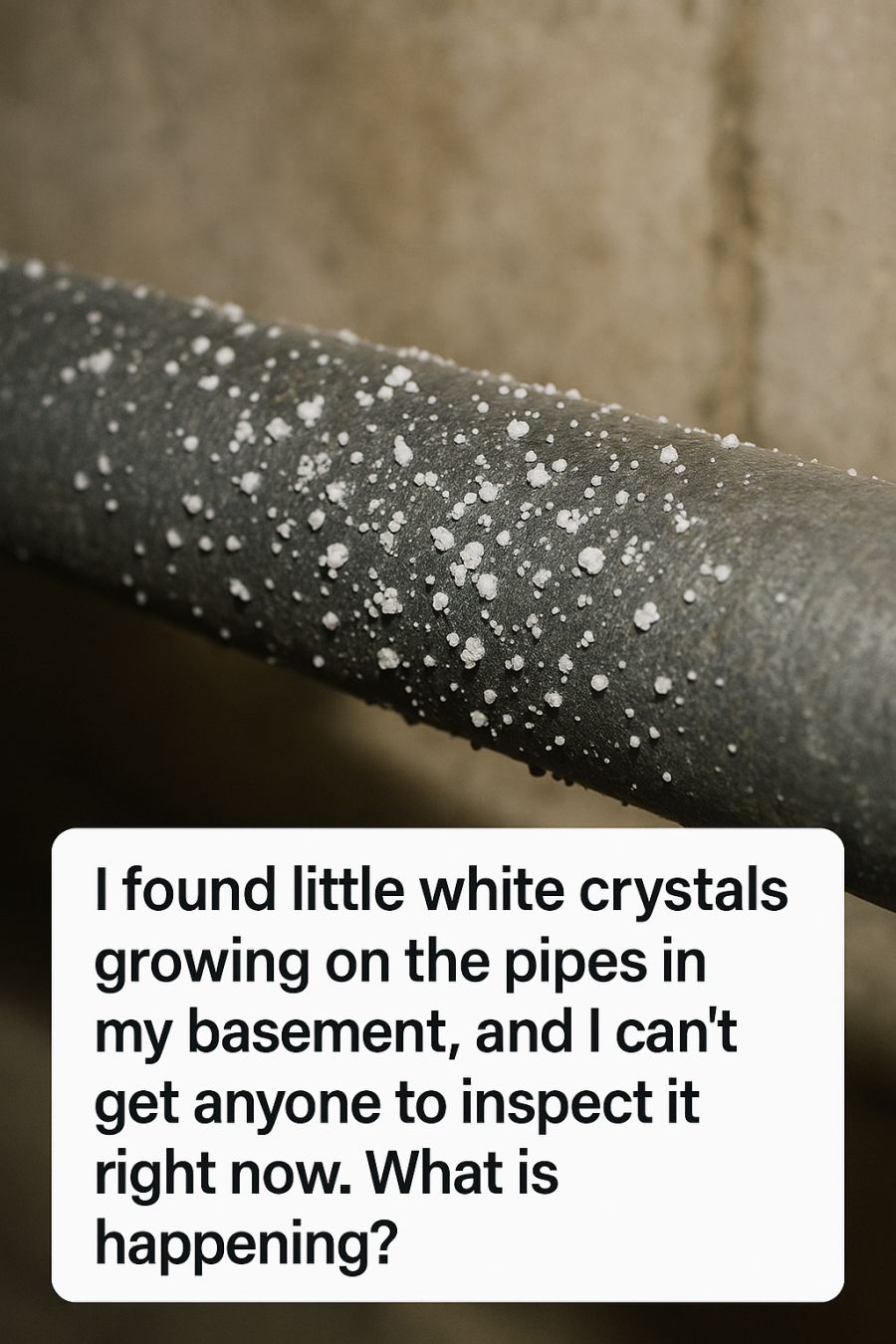
Discovering little white crystals growing on the pipes in your basement can be confusing and concerning—especially if you can’t get a professional to inspect the issue right away. These crystalline formations are usually a sign of an underlying moisture problem. Understanding what they are, why they form, and what you can safely do in the meantime can help protect your home and prevent further damage.
This article explains the most likely cause of these crystals, how to tell them apart from more serious hazards, and what steps you can take while waiting for professional help.
1. What Those Little White Crystals on Your Pipes Probably Are
The white crystals you’re seeing are most likely efflorescence. Efflorescence occurs when water moves through porous materials such as concrete, mortar, or masonry and dissolves naturally occurring salts. When the water reaches the surface and evaporates, it leaves behind a white, powdery, or crystalline residue. These deposits are commonly made up of calcium carbonate, sodium sulfate, or potassium nitrate.
Efflorescence is common in basements because they tend to have higher moisture levels. While efflorescence itself is not dangerous, it signals that moisture is present, which can lead to other problems if not addressed.
2. Why Efflorescence Forms on Basement Pipes and Walls
Efflorescence requires two things: water-soluble salts and moisture. Basements are particularly vulnerable because they are below ground and exposed to groundwater, humidity, and temperature differences.
Pipes often develop efflorescence due to condensation. When warm, humid air contacts cooler pipes, moisture forms on the surface, allowing salts to crystallize as the water evaporates. Poor drainage, inadequate waterproofing, or seasonal moisture changes can all make the problem worse.
3. How to Tell Efflorescence From Mold, Asbestos, or Other Hazards
Efflorescence is often mistaken for mold, but there are important differences:
-
Efflorescence is dry, chalky, or crystalline and dissolves in water.
-
Mold is usually fuzzy or slimy and can be white, green, black, or blue.
-
Asbestos is fibrous and does not dissolve in water; it is most commonly found in old insulation and building materials.
A simple test is to wipe the material with a damp cloth. If it dissolves, it is likely efflorescence. If you suspect asbestos, do not disturb it and seek professional testing.
4. Common Plumbing and Moisture Problems Behind the Crystals
Efflorescence almost always points to excess moisture. Common causes include:
-
Leaking pipes
-
Poor drainage around the foundation
-
Inadequate vapor barriers
-
Condensation on cold pipes
Even small, slow leaks can create enough moisture to cause salt deposits over time.
5. When White Crystals Signal a Serious Leak or Structural Issue
see continuation on next page
For Complete Cooking STEPS Please Head On Over To Next Page Or Open button (>) and don’t forget to SHARE with your Facebook friends.